
2026 State of the State Response
2026 State of the State Response
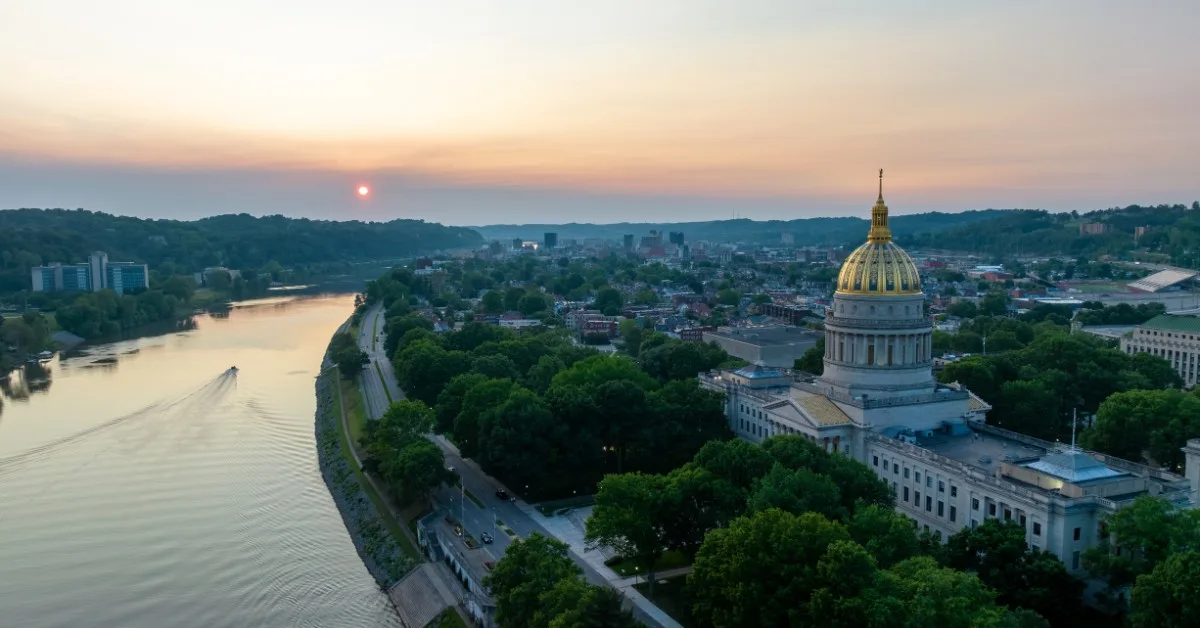
On Wednesday evening, Governor Patrick Morrisey delivered his annual State of the State address, outlining his priorities for the year ahead and offering a window into his governing philosophy.
As is customary, the speech functioned as both pep rally and agenda-setting exercise. State of the state addresses tend to be less about legislative line items than about how the Governor understands West Virginia’s challenges and the role government should play in addressing them. Like last year’s address, the speech could best be described as “conservative” in terms of its primary ideology.
At its core, Governor Morrisey’s 2026 message was one of economic renewal. He framed nearly every major issue — education, infrastructure, health care, and workforce participation through the lens of growth, opportunity, and affordability. That framing matters. States facing demographic headwinds like West Virginia and rising costs cannot afford to treat economic development as just one priority among many; it must be the organizing principle. The question, of course, remains: “how best to create the environment in which businesses and entrepreneurs flourish and thus create jobs?” Subsidies or dynamism? Politics or principles? Entrepreneurs or entrenched interests?
The Governor reiterated his commitment to well-paying jobs, workforce participation, and cost-of-living relief, while also proposing a 10 percent cut to the personal income tax. With tax cuts and continued support for education choice, the speech reflected a belief that families and businesses—not bureaucracies—are best positioned to allocate resources when given room to breathe.
Education freedom again featured prominently, with Governor Morrisey calling for full funding of the Hope Scholarship program. That commitment signals an understanding that long-term workforce and population growth depends on empowering families and retaining young people and not doubling down on highly centralized systems that have failed to deliver better outcomes for decades. Since West Virginia passed its groundbreaking Hope Scholarship program in 2021, over a dozen states have passed similar programs. Education freedom isn’t going anywhere and states who wish to remain competitive and attractive to families should embrace this reality, just as West Virginia, and Governor Morrisey, have.
The Governor also leaned heavily into economic development strategies tied to energy abundance and emerging industries. He highlighted data centers, broadband expansion, advanced energy, and infrastructure investment as pillars of future growth. If successful, these efforts could position West Virginia as a serious competitor for capital and talent, but only if paired with regulatory predictability and a clear commitment to keeping energy affordable for residents. However, deep skepticism is warranted that massive investments in broadband are likely to be a good deal for the state’s taxpayers moving forward.
While the Governor correctly identified inflation and utility bills as a growing burden on households, the challenge ahead will be ensuring that economic development strategies do not inadvertently exacerbate those pressures. Growth should translate into affordability, not just headline investment numbers.
Workforce participation again received well-deserved attention. Governor Morrisey is right to identify this as one of West Virginia’s most serious challenges. Solutions such as job portals, vocational training, and work requirements may play a role, but lasting progress will require a more comprehensive approach—reforming occupational licensing, addressing benefit cliffs, and modernizing reentry-to-work policies.
Finally, the budget backdrop cannot be ignored. Ambitious tax cuts, infrastructure investments, public employee pay raises, education funding, and health care initiatives must be reconciled with fiscal reality—particularly in a state with a shrinking population and uncertain federal funding streams. Sustainable growth and fiscal responsibility, not one-time infusions or accounting optimism, remains the only durable solution.
Taken together, Governor Morrisey’s State of the State reflects a governing philosophy grounded in economic dynamism, skepticism of centralized control, and confidence that West Virginia’s future depends on expanding opportunity rather than managing decline. If these ideas translate into disciplined, well-designed policy reforms, the Mountain State will be better positioned to offer what every family ultimately wants: a place where work is rewarded, costs are manageable, and the next generation can build a future worth staying for.