

Hope Scholarship and Education Freedom
Educational Freedom
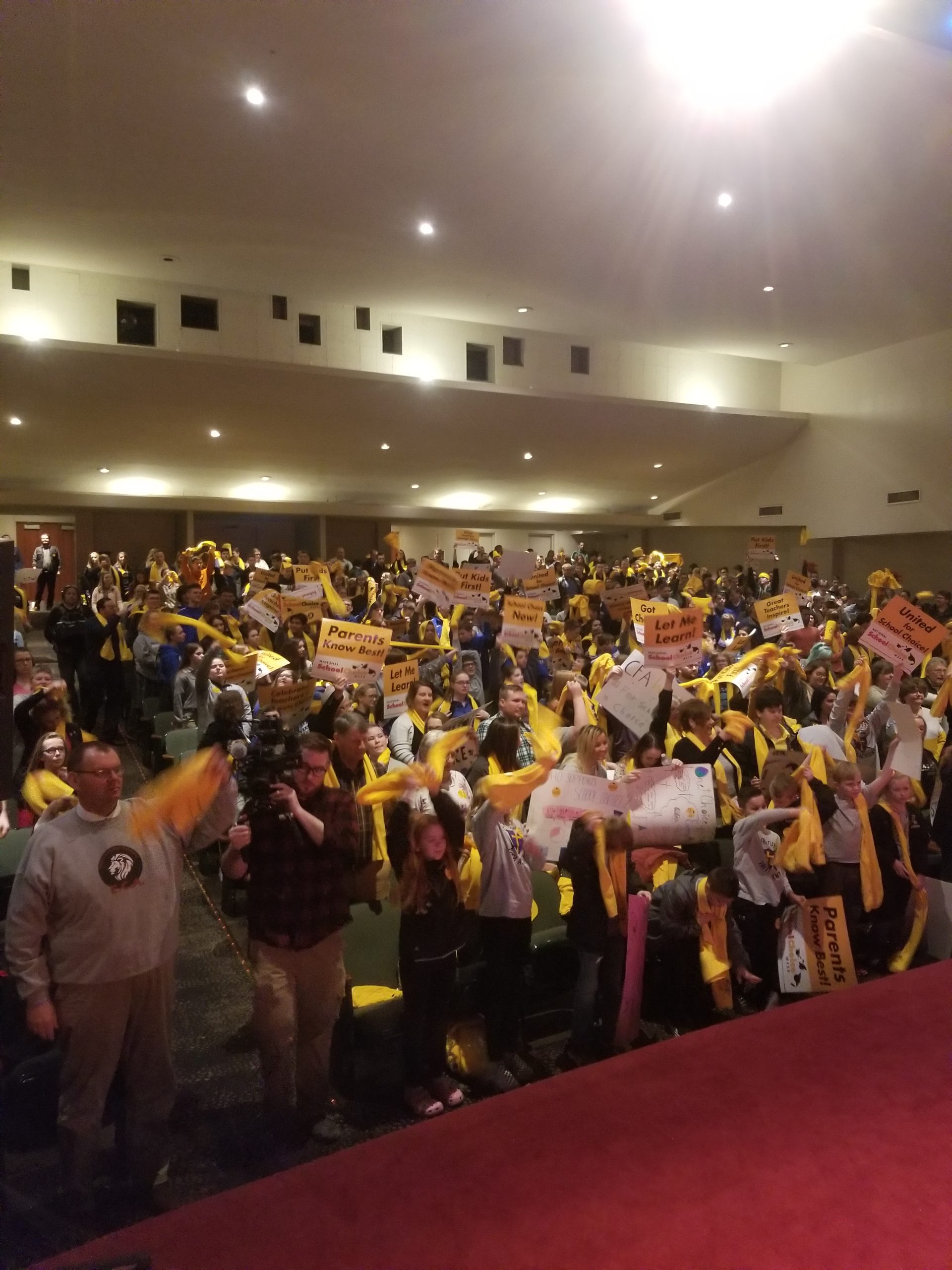
The Cardinal Institute has helped transform West Virginia from a state with limited educational options into a national leader in education freedom. Our work began with original research outlining how Education Savings Accounts could empower families—a vision that would eventually become the Hope Scholarship. Through years of research, coalition-building, storytelling, and advocacy, we helped advance public charter schools, expand open enrollment, and secure greater educational freedom for West Virginia families.
Cardinal’s work has earned multiple national awards and recognitions, including selection as a finalist for the prestigious Templeton Freedom Award, one of six finalists worldwide in 2021.
Education Choice
Education choice means empowering families with the freedom to select the best educational environments and resources for their children, regardless of where or how they choose to educate their children. An educational system built on choice supports public, private, charter, home-based, and alternative schooling options. This system does not restrict people based on arbitrary geographic or income barriers. It aims to provide maximum flexibility with minimum oversight to promote financial responsibility and transparency by local and state governing authorities. This approach is foundational to fostering a diverse and competitive educational ecosystem where schools strive for excellence to attract and retain students.
- Education Savings Accounts: Education Savings Accounts (ESAs), particularly the Hope Scholarship in West Virginia, are pivotal in the effort to give parents vital educational options. They provide families with direct financial support to cover various educational expenses, underscoring the shift toward funding students rather than systems. Such accounts are especially beneficial for students with specific needs, ensuring that the most vulnerable receive adequate support. The rolling application cycle further enhances flexibility, allowing families to respond to changing educational needs in real time.
- Charter Schools: Charter schools offer a crucial alternative to traditional public district schools. They have the potential to innovate and tailor learning experiences to diverse student needs. The call to remove the cap on brick-and-mortar and virtual charters in West Virginia is driven by recognizing their value in providing quality education choices to families across the state.
- Broadening Education Options: Tax Credit Scholarships and Open Enrollment are additional mechanisms to expand educational choices. They facilitate access to a broader range of schooling options, including private and public schools outside a student’s immediate geographic area, enhancing the match between student needs and educational offerings.
Public Schools
Regarding public schools, the focus is on optimizing funding and operational frameworks to ensure that public education systems can effectively serve all students.
- Funding: The School Funding Formula and regulations under Chapter 18/18A are central to this effort. They dictate how resources are allocated and how schools are governed. A thorough understanding and potential reform of these mechanisms are vital for ensuring that funds are used efficiently and equitably to benefit students.
- Pensions: Discussions around teacher pensions and the K-12 staffing surge highlight the need to balance resource allocation to attract and retain high-quality educators while addressing class sizes and the overall staffing structure to enhance educational outcomes.
Higher Education
The conversation around higher education focuses on ensuring that post-secondary education delivers value to students, particularly regarding the financial implications of earning a degree.
- Ensuring affordable and valuable higher education: Evaluating the income-to-debt ratios for college degrees. Such evaluations help prospective students make informed decisions about their education, emphasizing programs that offer a strong return on investment and cautioning against those with poor financial outcomes.
By embracing educational freedom and implementing policies prioritizing student choice, West Virginia sets the stage for a more dynamic, responsive, and high-quality educational system. Through these policy changes, the state can better meet the diverse needs of its students. Paving the way for a future where every learner has the opportunity to succeed.
Learn more about how these policy changes can positively impact your life in West Virginia. Explore our detailed resources to understand the real-life implications of these policies and how they can enhance your day-to-day living.
Hope Scholarship Resource Center
What is the Hope Scholarship?
West Virginia parents now have more flexibility and choices to educate their children than ever before! The Hope Scholarship became law in 2021 and allows the state portion of West Virginia’s education funding formula to follow a student to various individualized educational environments outside of full-time enrollment in the traditional public school system.
These funds can be used to pay tuition at a private school, to purchase curriculum for home education, to pay for educational therapies, to cover the costs of supplemental educational materials, and so much more! You can read the full list of qualifying expenses here.
The Hope Scholarship is a school choice program known as an Education Savings Account (ESA). The Hope Scholarship will allow parents and families of eligible students to use the money on qualifying educational expenses.
The Hope Scholarship is an exemption from compulsory education in West Virginia (exemption m), and it is an alternative to full-time enrollment in a public charter school or traditional public district school.
How much money will my family be eligible to receive?
The Hope Scholarship gives parents 100% of the state portion of the West Virginia educational aid formula each year.
The Hope Scholarship amount will vary annually depending on the amount of state aid funding per pupil provided to county boards of education for public school students. The award amount for the 2024-2025 academic year is $4,921.39.
The Hope Scholarship award amount is per child, per year to customize each child’s education. The Hope Scholarship will allow parents and families of eligible students to use the money on qualifying educational expenses.
I have more than one child. Are they all eligible?
Each child’s eligibility is evaluated individually. You will need to apply separately for each child. You can read more about Hope Scholarship eligibility requirements on the official Hope Scholarship website in their FAQ section.
Learn more here: https://hopescholarshipwv.gov/Home/About/FAQ

Check out some of our Education Freedom articles

ECON 101 with Dr. JT: Education Costs & the Hope Scholarship

Let’s give Hope (scholarship) to those that need it.
