
Remembering 9/11
Seventh grade. Elkview Middle School. In the second-floor hallway waiting to go into English-Language Arts class with Mrs. Johnston.
That’s where I was and what I was doing when I first learned about the terrorist attacks of September 11, 2001. If you’re around my age or older, I’m sure you remember yours, too. For better and worse, this tragedy was a universally shared experience; one that marks a stark before and after in the timelines of our lives.
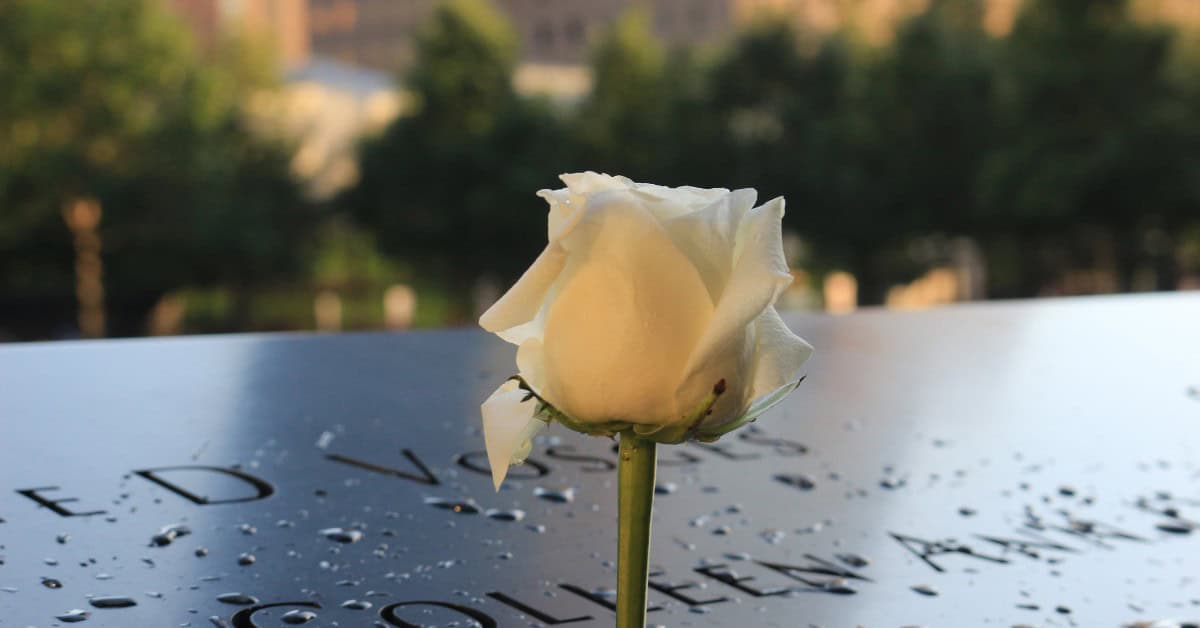
Last month, on the tail end of a trip to NYC to join friends from all over the world at Atlas Network’s Liberty Forum & Freedom Dinner, I took the time before my flight back to West Virginia to visit the 9/11 memorial and museum. As someone who has been to NYC as many times as I have, making this trip felt like a fundamentally American experience I should partake in.
After visiting, I must suggest – anyone who can make this visit unequivocally should. That said, prepare yourself for an extremely emotionally taxing experience – particularly if you’re old enough to remember the day itself. I was just old enough to grasp the implications of those attacks, and I’ve only grown more conscious of what it cost us in the 23 years since.
9/11 Changed Our Country
What happened that day altered the fabric of our country, and our world, in profound ways. As is the case with any massive event, the reactions were both good and bad.
After the shock of the attacks wore off, solidarity and patriotism seemed like it was at an all-time high. If you could find a flag, you flew it. Maybe you bought one of the FDNYPD New York Yankees hats to show your support for the first responders. Leaders from other nations throughout the world expressed their support for the United States.
Then we declared a war on terrorism and vowed to bring justice to the attackers and those who helped them. We sent sons, daughters, friends, and family overseas to fight that war against an elusive enemy and an ideology that most of us fundamentally cannot wrap our minds around. Not all those loved ones came home. Like any war, the loved ones who did return home brought back scars we can’t see.
Major Events Often Bring Costly Policy Changes
These costs in the War on Terror weren’t solely inflicted abroad or by those who fought these wars. Here on American soil, those costs were exacted through losses of civil liberties in the name of enhancing security. The PATRIOT Act is the chief offense that comes to mind, expanding the surveillance capabilities of law enforcement. Concerns of PATRIOT Act opponents have proven grounded over the years. On several occasions, actions taken by the FBI under the expanded surveillance powers granted by the act have been deemed unconstitutional violations of the 4th Amendment.
Thanks to my many travels, the TSA is granted no favors in my mind either. The 9/11 attacks exposed vulnerabilities in existing airport security structures. While the agency is also tasked with developing policies to protect the totality of US transportation systems, its primary function is airport security. While the intentions are noble, I suspect a great many of us would more gracefully suffer the indignities of removing our shoes, unpacking our electronics to go through the screeners, and enduring full body scans if the agency didn’t fail undercover tests to detect weapons or explosive materials from 80% to 95% of the time.
Keep An Eye on Policy Suggestions in Reaction to Major Events
All this to say, in times of great upheaval, it’s fair to be wary of the policy changes that politicians suggest from on high. We saw it after 9/11. Again, we saw it after the financial crisis. And recently, we saw it during the pandemic.
The most dramatic scenarios draw public cries for the government to “do something!” In those moments, we are tasked with weighing the trade-offs between liberty/privacy and safety along with the corresponding costs and benefits. All too often, the benefits are easily and quickly identified while the costs take more time to render themselves apparent. In these times, we would do well to remember that these emergency measures almost never go away after the dust from the crisis settles. So we should carefully consider that “do something!” demand.